
What Is PVD Coating? A Complete Guide for Manufacturer
Physical Vapor Deposition (PVD) is a vacuum-based thin-film coating technology used to enhance surface hardness, wear resistance, corrosion resistance, and appearance.
While often compared to electroplating, anodizing, or CVD, PVD operates through a fundamentally different physical deposition mechanism and offers distinct performance advantages.
What Is PVD Coating?
PVD coating is a vacuum-based surface treatment in which a solid material is vaporized and deposited as a thin film onto a substrate. The coating bonds at the atomic level — it doesn't just sit on the surface, it becomes part of it.
Typical coating thickness ranges from: 0.5–5 μm. Thinner than a human hair, yet capable of dramatically improving a surface's hardness, wear resistance, corrosion resistance, and appearance.

PVD is widely used in:
Cutting tools
Automotive components
Consumer electronics
Decorative hardware
Solar and energy devices
Medical instruments
Its adaptability allows optimization for either functional performance, decorative finish, or both.
How PVD Works
All PVD processes follow three basic steps:

Vaporization – The source material is converted from solid to vapor inside a vacuum chamber.
Transport – Vaporized atoms travel through a low-pressure environment toward the substrate.
Deposition – The vapor condenses onto the substrate surface, forming a thin film.
The vacuum environment minimizes contamination and enables controlled film formation. The primary distinction between PVD variants lies in how the source material is vaporized.
Three Main PVD Process Types
1. Magnetron Sputtering
Plasma ions bombard a target, ejecting atoms that deposit onto the substrate.
Magnetic fields confine electrons near the target surface, increasing plasma density and deposition efficiency.
Advantages:
Excellent film uniformity
Broad material compatibility
High process control
Suitable for high-volume production
Best for: Decorative coatings, hard coatings on cutting tools, optical films, semiconductor applications, and any application requiring precise control over film composition.
2. Cathodic Arc Deposition
A high-current arc vaporizes the target, generating a highly ionized plasma with energetic species.
This results in:
Dense films
Strong adhesion
High hardness
Hardness can exceed: 2000–3000 HV
Common materials:TiN, TiAlN, CrN.
Arc processes may generate macroparticles; filtered arc systems reduce this effect.
Best for: Hard coatings for cutting tools, molds, dies, and industrial components requiring maximum wear resistance.
3. Thermal and Electron Beam Evaporation
The source material is heated (resistively or by electron beam) until evaporation occurs. Evaporation produces high-purity films and is widely used in:
Optical coatings
Transparent conductive films
Roll-to-roll flexible substrates
Due to its line-of-sight nature, coating uniformity on complex 3D parts may require substrate motion or planetary rotation.
Best for: Optical coatings, transparent conductive films, flexible substrate applications, and solar cell manufacturing.
What Materials Can Be Deposited?
Material flexibility is one of PVD's core strengths. Common coating materials include:
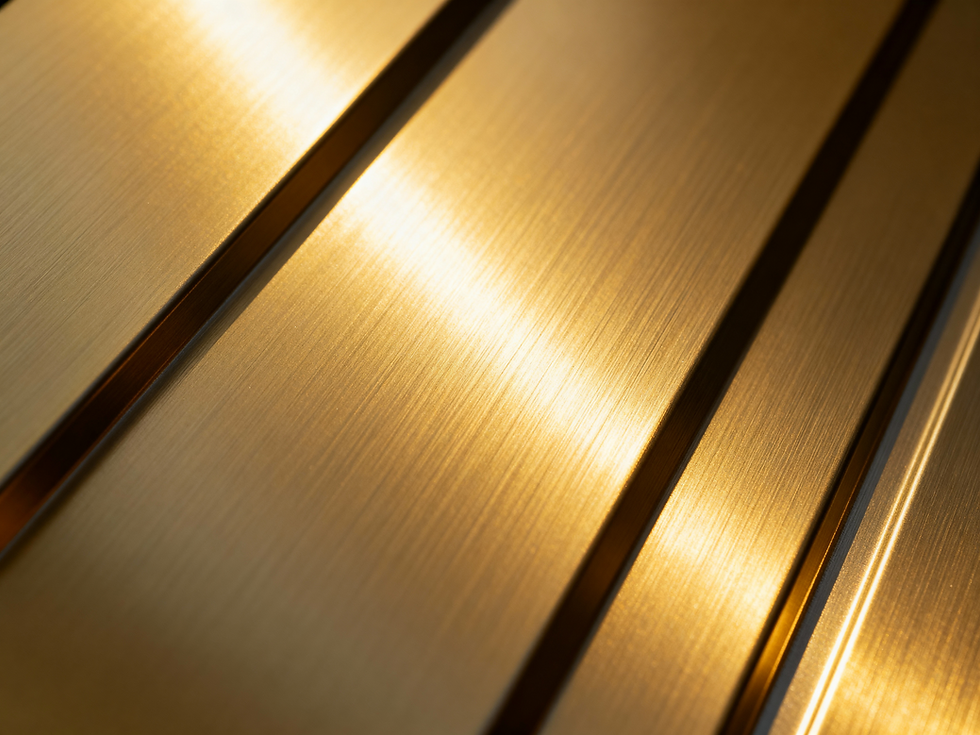
· Titanium nitride (TiN) — The gold-colored coating you've seen on drill bits. Hard, wear-resistant, and cost-effective.
· Chromium nitride (CrN) — Excellent corrosion resistance; widely used in automotive and hydraulic components.
· Titanium aluminum nitride (TiAlN) — High-temperature stability; the go-to for high-speed machining.

· Diamond-like carbon (DLC) — Extremely hard, low friction, and biocompatible; used in medical devices and precision components.
· Zirconium nitride (ZrN) — Produces a gold-like appearance with good hardness; popular in decorative applications.
· Aluminum, silver, copper — Used in electronics, reflective coatings, and conductive films.
· Indium tin oxide (ITO) — Transparent and conductive; critical for touchscreens and solar panels.
Reactive gases such as nitrogen or oxygen can be introduced to form nitrides or oxides (reactive PVD).
PVD Coating vs. Electroplating
Electroplating is the most common alternative to PVD for surface finishing, and the comparison comes up constantly. Here's how they actually differ:
| PVD Coating | Electroplating |
Process | Vacuum-based, physical deposition | Wet chemistry, electrolytic bath |
Adhesion | Atomic-level bond | Mechanical/chemical bond |
Film thickness | 0.5–5 microns | 5–25+ microns |
Hardness | Very high (up to 3000+ HV) | Moderate |
Environmental impact | Clean, minimal waste | Uses toxic chemicals (hexavalent chromium, cyanide) |
Material options | Metals, alloys, compounds, ceramics | Primarily metals |
Temperature sensitivity | Low-temperature options available | Generally low temperature |
Cost | Higher upfront (equipment) | Lower upfront, higher ongoing |
Electroplating remains suitable for thick coatings and low capital cost applications. However, PVD offers superior hardness and eliminates hazardous liquid waste associated with processes such as hard chrome plating.
PVD Coating vs. CVD (Chemical Vapor Deposition)
CVD is the other major thin-film process that manufacturers sometimes weigh against PVD. Both produce hard, adherent coatings — but the process differences are significant.
CVD uses chemical reactions at the substrate surface to deposit the film, and it typically requires much higher temperatures — often 900–1100°C. That limits the substrates it can be used on. PVD operates at significantly lower temperatures; some processes run below 200°C, making it compatible with temperature-sensitive materials like certain steels, plastics, and pre-hardened components.
CVD has its advantages: it can coat complex internal geometries more uniformly, and it's well-established for certain tool coating applications. But the temperature constraint and the handling of precursor gases — which can be hazardous — are real operational challenges.
For most decorative applications and many functional ones, PVD is the more flexible and practical choice.
Why Manufacturers Choose PVD

The decision to invest in PVD equipment is rarely driven by a single factor. It's usually a combination:
High surface hardness and wear resistance
Stable decorative finishes
Reduced environmental impact
Precise process control
Multi-material flexibility
One properly configured system can often support multiple coatings and applications.
PVD Coating System Types
Not all PVD equipment is the same. The right system depends on what you're coating, the volumes you're running, and the properties you need.
Batch Systems
Parts are loaded into a chamber, coated, and unloaded. Batch systems are the most common configuration for decorative and functional coatings on discrete parts — hardware, tools, automotive components. They're flexible and can handle a wide variety of part geometries.
Inline Systems
Parts move continuously through the coating system on a conveyor or carrier. Inline configurations are built for high-throughput production where cycle time is critical. They're common in flat panel display manufacturing, architectural glass, and large-scale decorative coating operations.
Roll-to-Roll (R2R) Systems
Flexible substrates — films, foils, fabrics — are unwound from a roll, coated, and rewound. R2R PVD is essential for flexible electronics, packaging films, solar cells on flexible substrates, and optical films. The process runs continuously, making it highly efficient for high-volume flexible substrate production.
Research and Development Systems
Smaller, highly configurable systems designed for process development, material research, and small-batch production. R&D systems prioritize flexibility and diagnostic capability over throughput.
What to Evaluate in a PVD System
The specification sheet is only part of the picture when evaluating PVD equipment. Here's what experienced manufacturers actually pay attention to:
Process capability match. Does the system support the specific PVD process — sputtering, arc, evaporation — that your application requires? Can it run the coating materials and reactive gases your recipes call for?
Chamber size and throughput. Will the chamber accommodate your part sizes and production volumes? Throughput requirements often drive the decision between batch and inline configurations.
Power supply quality. The power supply is the heartbeat of a PVD system. Stable, well-controlled power directly affects coating uniformity and repeatability — and cutting corners here shows up in product quality.
Automation and process control. Modern systems should offer recipe management, real-time process monitoring, and data logging. These aren't luxuries; they're what makes consistent, traceable production possible.
Supplier expertise and support. PVD is a sophisticated process. Equipment suppliers who understand the coating science — not just the hardware — are worth more than those who simply ship machines. Process support, troubleshooting capability, and application knowledge matter over the full life of the equipment.
Conclusion

PVD is a mature thin-film technology delivering high-performance surface engineering across industries. When matched correctly to application requirements and supported by process expertise, a PVD system becomes a long-term manufacturing asset.

At Celli, we bring over 30 years of coating industry expertise to every system we design and supply. Our portfolio covers functional, decorative, inline, roll-to-roll, and research-grade PVD systems, along with the power supply solutions that underpin them. We work with manufacturers across consumer electronics, automotive, renewable energy, kitchen hardware, and more to match the right system to the right application.
For more information, visit cellitech.com
Contact us: info@cellitech.com
Disclaimer: Some images used in this article are sourced from Freepik.


